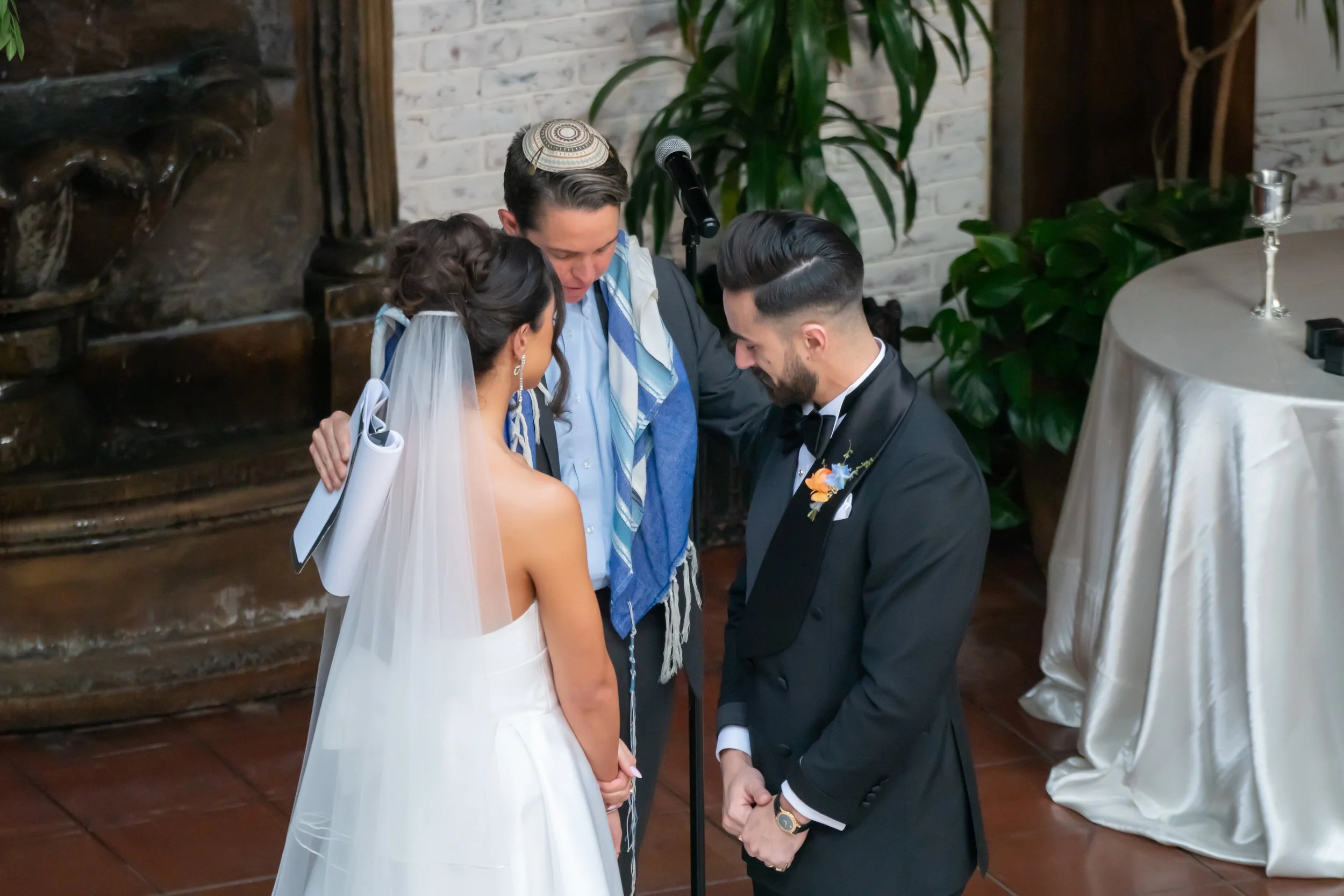
A bride and groom standing with two people, possibly officiants, during a wedding ceremony. The bride is wearing a white dress with a veil, and the groom is in a black tuxedo. They kneel with their hands clasped and heads bowed. One officiant wears a kippah and a blue scarf, and the other person is in a dark suit. A microphone is set up nearby, and the background includes greenery and a white brick wall.

lifecycles and rituals

When I meet with someone to prepare for a lifecycle or transition ritual, I want to know you, your story, your hopes for the experience, and to understand the spiritual journey that has brought you to the moment. Together, we will imagine how to connect your experiences to Jewish tradition. 

I welcome the opportunity to officiate traditional Jewish lifecycle rituals, as well as to co-create new rituals and enact contemporary rituals created for life’s moments.

As a professor of rabbinical students at HUC-JIR, I teach rabbinical students how to perform Lifecycles. In that course, as in my own life and practice, it is of critical importance for me to lift up the lived experiences of women, LGBTQ+ people, and individuals who have experienced loss.
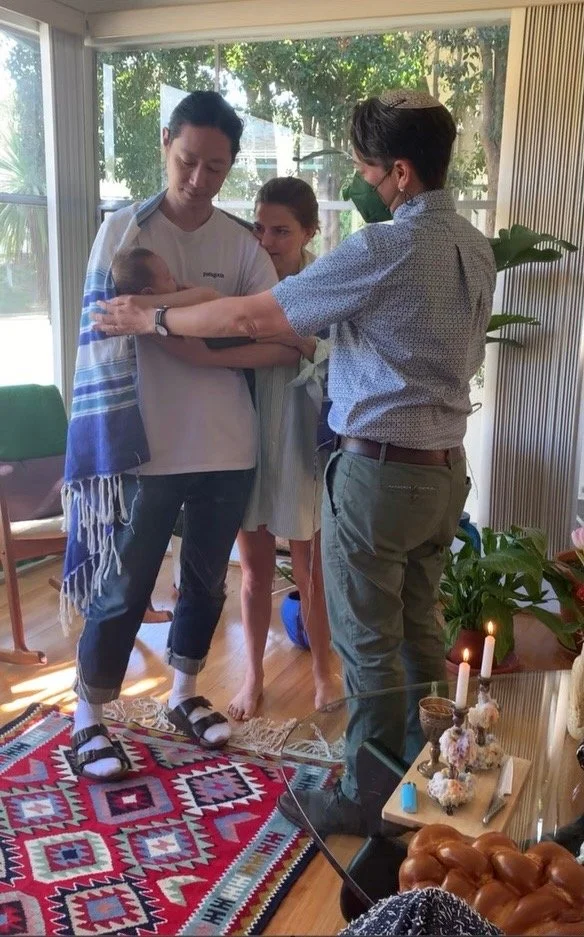
A couple holding a newborn baby during a religious or spiritual ceremony, with a woman and a man officiating, in a room decorated with plants and candles.
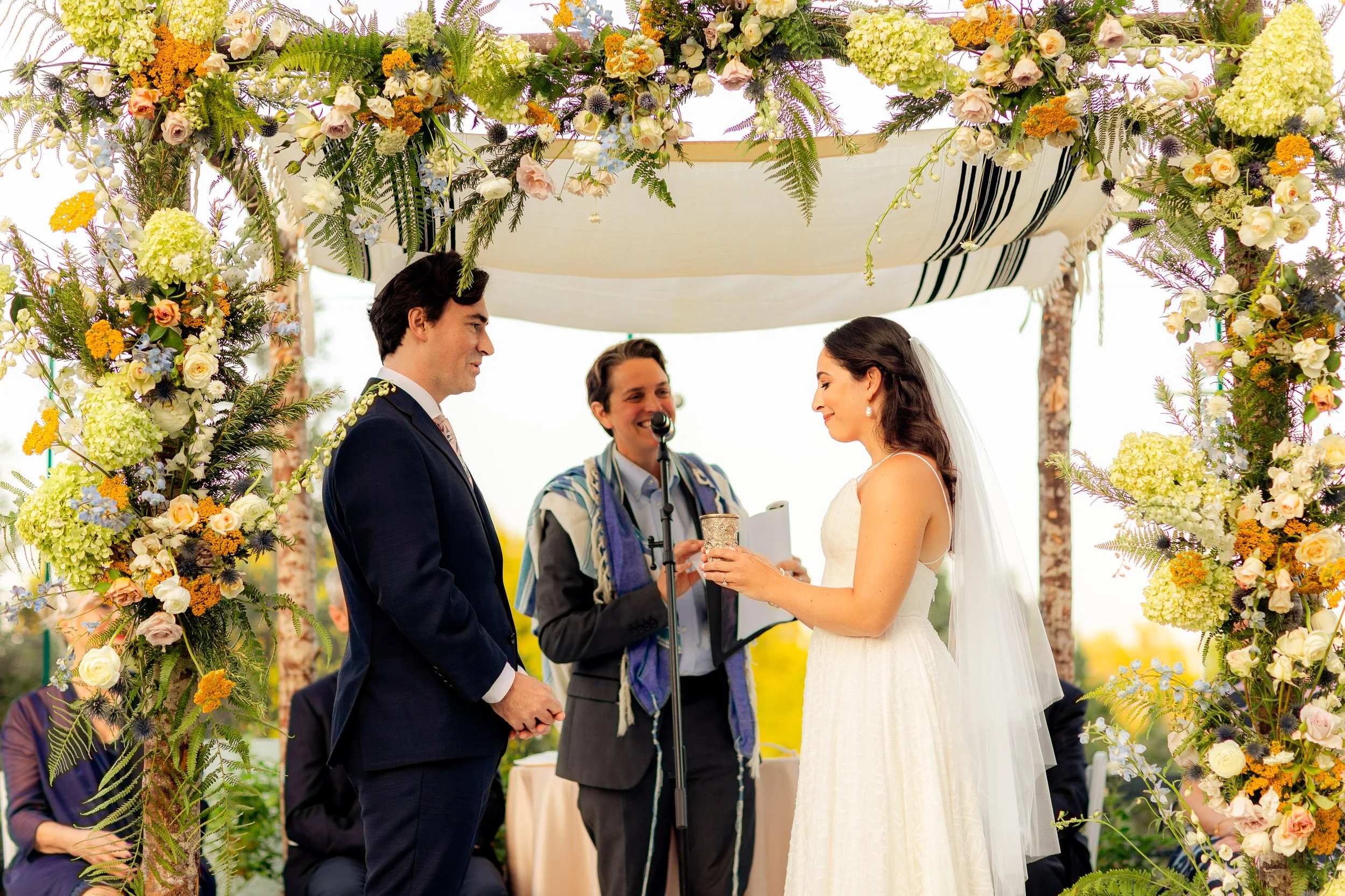
A couple getting married outdoors under a floral arch with an officiant present. The bride wears a white wedding dress with a veil, and the groom wears a dark suit. The arch is decorated with a variety of colorful flowers and greenery. The couple appears to be exchanging vows or rings during their wedding ceremony.
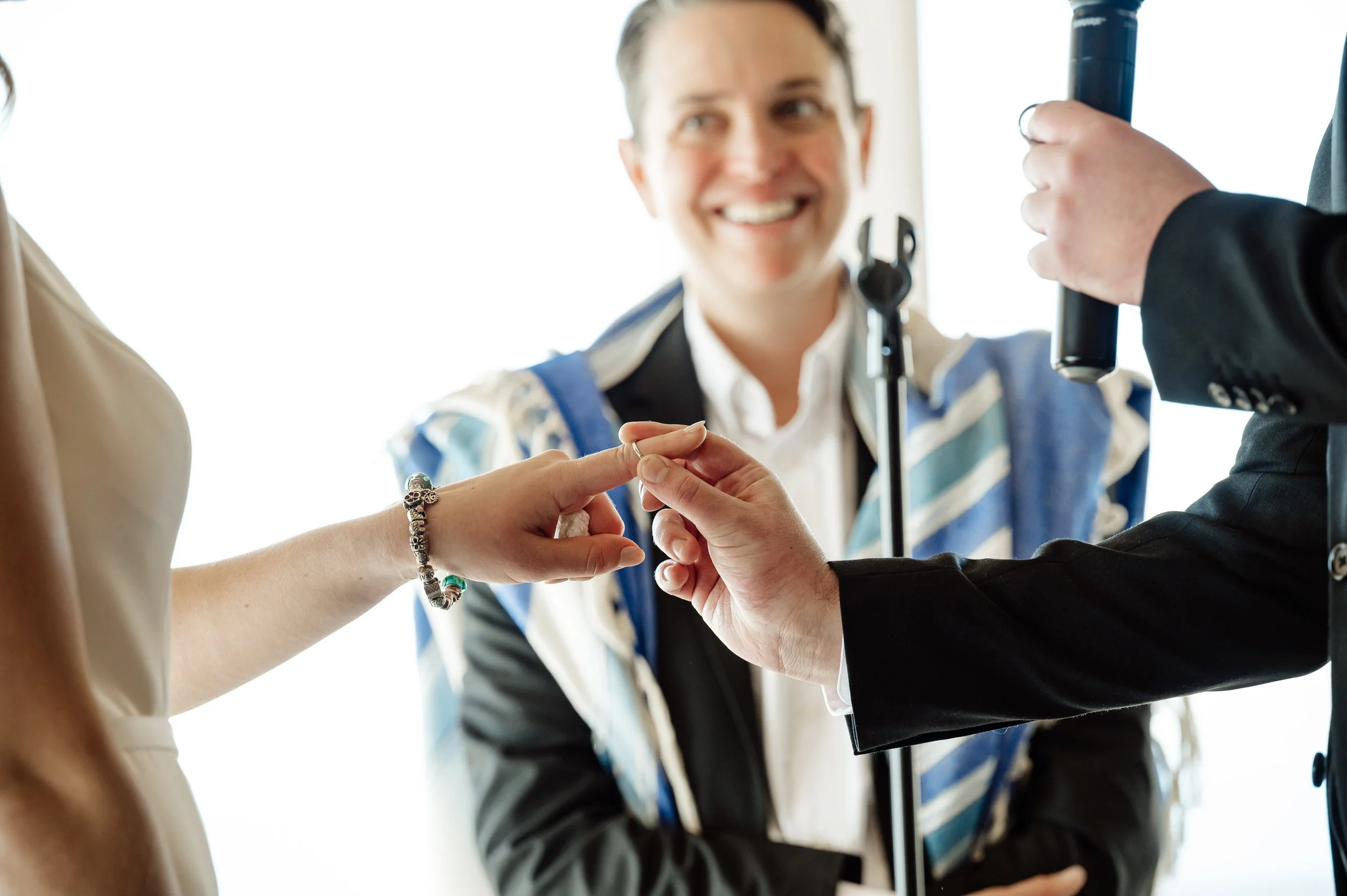
A group of people exchanging wedding rings during a ceremony, with a smiling woman in the background.